San Francisco Bay Area Business

Business Valuation

Things To Consider Before Selling Your San Francisco Bay Area Business

You’ve put in the years, labored long days, sweat the bad times, and high-fived in the good as your business grew. Now, it looks like it’s time to step away into the next life stage, slay the next dragon. It’s time to sell. (You think.) Whether you’re headed to another career or a seaside retreat, get what your business is worth before you walk away. Because if you’re not careful, you won’t. And, by the way, there are TAX implications that will absolutely come into play if you’re considering this. Your entity structure can make a big difference for what is possible. And we might want to consider together what entity formation you’re operating under, if you have this in mind. Let’s talk: Patti (408) 241-4100  Gale 408-775-7800 And one more thing before I dive in… Wednesday, September 15th is the due date for third-quarter estimated taxes. If you’re reading this, and it’s already past … don’t fret, just pay it now … there’ll be some small penalties, but nothing crippling. The idea is to avoid LARGER penalties if the clock continues to tick. Things To Consider Before Selling Your San Francisco Bay Area Business“Everything you’ve ever wanted is on the other side of fear. ”  -George Addai When you’ve been in the grind of running your business for a while, there inevitably comes a point where you begin to daydream about selling your business and moving on. The funny thing is, the actual sale can often show up right out of the blue. And since that’s true, you don’t want to be caught off guard by a lack of preparedness. Think, what would you want to see if you were the prospective buyer? (Solid numbers, for starters.) How do your assets compare with your liabilities? What’s your income stream? Make sure your annual financial statements are on hand and up to date showing your financial position, cash flow, and operations expenses. Have a professional (someone like yours truly) audit your financial statements going back about three years – which makes for a good-looking record, complete but not too long, especially concerning your profits. Don’t forget to include more recent financial info like Paycheck Protection Program (PPP) loans, if you had one. (Related to this topic and depending on your business, be prepared to talk with prospective buyers about any recent supply chain troubles.) This whole process lets you spot and highlight your best numbers for an eventual buyer. More importantly, you can find and fix any money or tax issues – because nothing can kill your deal faster. Get what you’re worth. It also puts you in a position to talk up how you beat your competition. By the way, you’ll want industry standards on hand to show how your San Jose business stacks up – and, more importantly, to make sure you get a good sales price. What if some of the numbers aren’t great? Then admit it. A buyer worth your time isn’t going to expect perfection in your operation, and it’s way better they hear about a problem from you now than unearth it in their due diligence. The buyer doesn’t want any surprises during this sale process. You want them even less. More landmines Your books are only the start when getting ready to put your business on the market. Here’s what else to do. Make nice with the taxman. Tax troubles are another surefire deal killer. If you have any doubts with any of the tax jurisdictions you deal with – your state or the dreaded IRS – make a call to see if you can check off that your tax history with them is squeaky clean. Be sure all of your filings and payment obligations are up to date. Keep your tax preparer in the loop – which leads us to the next possible trip-up. It’s time you got professional help. Selling your San Francisco Bay Area business is one of the biggest deals of your life. Do NOT risk tackling this without the help of a lawyer and/or tax expert.Remember: Odds are your buyer is going to know more ins and outs of this process than you do and probably with their own professionals advising them. Don’t go it alone. Ditto with marketing the business sale. Without experts to help, you might find yourself with fewer potential buyers – and you definitely don’t want that. Your employees aren’t leaving, remember? Do you have key people right now that thebusiness is going to want to keep? Talk early and often with a prospective owner about how to retain those folks. Sweeten the pot? This one gets overlooked a lot: If you’ve got a major account that depends on just you, groom an employee now to take it over. Your buyer is going to want to know that losing you doesn’t mean losing that account. Don’t forget — you do still have a job. Big, life-changing deals are exciting – and distracting. Don’t become so wound up in the sale that you forget the day-to-day management of your San Jose business. It’s not going to impress the potential buyer if you drop the ball on the current sale or your inventory comes up short because you forgot to place a big order. Force yourself to keep paying attention. Have a plan. Really, are you ready for this move? How exactly does the sale fit into your plan? Let’s say you aim to retire. Are you ready emotionally to leave the rat race? Got a plan to fill your suddenly free days? And whether you plan to kick back or immediately go into another business, is this sale going to net enough to meet those goals? This could be one of the biggest things you ever do, so take the time to think through and prepare for it — and find a professional you can trust to walk you through the process. We’re always here to help you… and your San Francisco Bay Area business. Patti (408) 241-4100  Gale408-775-7800 To your bottom line and a beautiful exit,

Business Growth, Business Tax Planning

Small Business Tax Credit Updates San Francisco Bay Area Owners Will Want to Consider

We wanted you to know about something that came across our desks the other day because it is potentially very good news… Not many are talking about this, but there have been some MAJOR new Economic Injury Disaster Loan (EIDL) program updates from the SBA… While I like to steer clear from “recommending” that anyone take out a loan, San Francisco Bay Area businesses seeking low-cost access to capital absolutely should be evaluating the EIDL option in light of the new and highly favorable changes. These are 3.75%, fixed-rate, no fees (if you apply directly through SBA), 30-year repayment term, and no personal guarantee if the amount is $200,000 or less … … those are pretty incredible terms. Thought you’d be interested. (Though the response time on actually receiving increased funds has widely run the gamut, from what we’re hearing. Don’t expect that this will be a “rapid” infusion of cash.) That’s just one of a few changes you should know about. The rest, we’ll cover below… Small Business Tax Credit Updates San Francisco Bay Area Owners Will Want to Consider“I always tried to turn every disaster into an opportunity. ”  – John D. Rockefeller Businesses and their owners the country over have been enjoying some great small business tax credits from the federal government in the last 18 months. But, as 2021 is winding down, it’s important to know that some of them are on their way out. Small business tax credits soon ending for San Francisco Bay Area employers this year: So, let’s start by talking about the Employee Retention Credit (ERC), which has been a tax boon to small and midsize San Mateo businesses trying to keep people on the payroll. Washington looked to keep the ERC available through the end of the year, but the powers that be on Capitol Hill may pull the plug early as part of that headline infrastructure bill. Nobody knows right now if the ERC or some version of it will stay alive. Stay tuned. Small business tax credit changes in the pipeline – maybeNow we come to what might happen. Lawmakers love to change things, and there are proposals right now to do just that to your taxes … and, of course, not always in a good way. You have to plan for a lot of outcomes, sometimes. For instance, if your company is what’s called “a pass-through entity,” there’s a new bill in Washington you should know about. The Small Business Tax Fairness Act will try to lower the amount of money you can make and still get the tax deduction for your “qualified business income.” On the plus side, the Act does also look to expand who can take the deduction to include accountants, financial advisors, attorneys, doctors, and other professionals. Please get in touch if you’re one of these companies and want to know more. Never a dull momentRecent events have inspired some to think, “I’ve had it. I’m selling my San Francisco Bay Area business and retiring sooner rather than later.” If you’re in this camp, as far as taxes go, you have two choices: Slam on the brakes or put the pedal to the metal. Crazy, right? But this schizophrenia can be explained because “tax the rich” proposals in Washington want to hike capital gains taxes and kill the step-up in basis (a type of valuation for tax purposes that historically has protected heirs from larger tax bills). So, you’re stuck. Sell your business down the road, and you could be socked with a big capital gains tax bill. Leave the business to your heirs instead, and the IRS may wallop them eventually because by that time they’ll no longer have the shield of step-up in basis. What to do about these small business tax credits from the federal government coming to an end? Well, the discussion about the above on Capitol Hill is still, right now, just proposals. That could change any day. Watch for more back and forth in Washington. And, for the rest of us in the real world, more suspense as we plan for taxes. If you sell online, watch outLet’s look at state taxes, too – especially if your San Jose business has joined the e-commerce boom, and you sell over the internet. You may have noticed that states (and other tax jurisdictions – watch out here for cities and even towns) are always claiming to be short of cash. With not as many people staying in hotels or eating in restaurants over the past several months, that’s a lot of sales tax states didn’t collect. So, what are they doing about it? Looking around for small businesses that sell more products online. This actually started a few years ago with a Supreme Court case called Wayfair. It basically gave the green light to states to start demanding that if you sold enough in their area, you have to collect and send back to states sales tax on the purchases no matter where your business is. Sounds simple – except every state and more than a few municipalities around the county have their own tax rates and deadlines for you to file and pay. And they’ve plenty of penalties to whip out if you mess up. Typically, you do have to sell about six figures annually in the state or have a set number of transactions – but these rules change all the time. In this and all tax matters, your business is too valuable to leave to chance. Talk to us if you need help with this ever-changing world. We’re always here to help you with this stuff … and ALL of your business. Patti (408) 241-4100  Gale 408-775-7800 To your bottom line… and to paying less tax, Patti ONeill and Gale Bergado(408) 241-4100ONeill & Bergado

Business Growth, Business Tax Planning

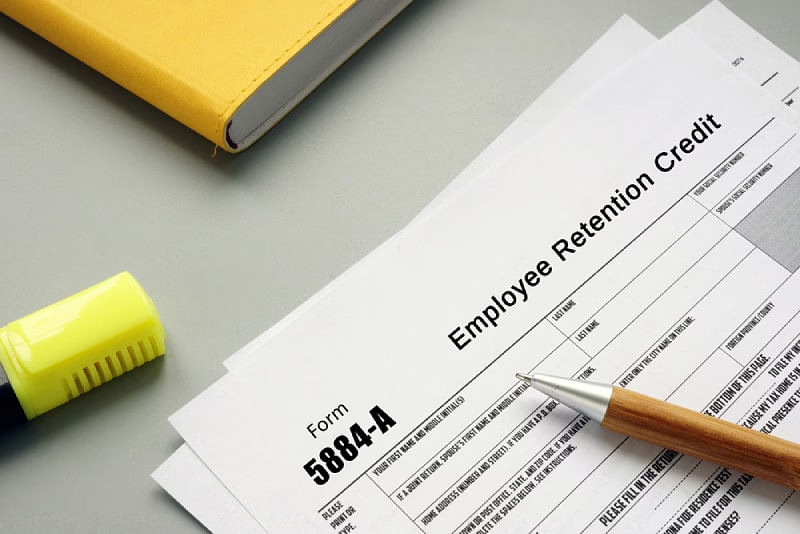
Is The Employee Retention Tax Credit Right For Your San Francisco Bay Area Business?

There is a LOT of smoke emanating from Congress right now. As usual, with Congress, there are always rumors and mutterings — what matters is what is actually signed into law. And we’ll keep you up to date on what you might need to know. But speaking of Congressional acts that have been signed into law … Wouldn’t it be great to get money for just having kept your San Francisco Bay Area employees afloat during the last rough-as-nails year or so? Well guess what? Maybe you can. Trouble is, Congress may soon take this deal away. Or it may not. Here’s the latest word on that and how you can still cash in – for now. Is The Employee Retention Tax Credit Right For Your San Francisco Bay Area Business?“Somewhere, something incredible is waiting to be known.” – Carl Sagan Late last year the Taxpayer Certainty and Disaster Tax Relief Act of 2020, following up on earlier relief laws, allowed the good folks at the IRS to give San Francisco Bay Area employers like you a real tax break. The Employee Retention Tax Credit (ERC) is a refundable tax credit – sort of a thank you from Uncle Sam – on the employer share of Social Security taxes that your business pays if you’ve been hit by the pandemic but kept your employees on payroll instead of laying them off.  Here’s how it works: If your San Francisco Bay Area business qualified, you could whack a chunk off what you paid in tax equal to, for this year, 70% of most wages you paid to employees through June 30. This applies to wages and compensation, in general, that are subject to Federal Insurance Contributions Act (FICA) taxes. How do you qualify? Two ways, primarily: You got dinged in the down economy or the government “closed you down” during a particular quarter because of the pandemic. Under the newest rules, if your business took at least a 20% hit for a quarter in 2021 compared to the same quarter in 2019, you are eligible. ERC regs for 2020 required a 50% decline over the same quarter in 2019 (or a government shutdown). A company can now have up to 500 full-time employees and qualify, up from 100 under old ERC regs. (Bigger companies can also qualify, but the wage restrictions are a little tighter.) The newer rules added ERC eligibility for the second half of this year for more businesses like public universities, hospitals and medical-care providers, “recovery startup businesses” that opened their doors after Feb. 15, 2020, and for all wages including for work and for paid time off. You can only get seven grand per employee per quarter max in 2021 but still, who couldn’t use this kind of cash? Where do you sign up? Not so fast – enter Congress Even as we speak, the House of Representatives is batting around the Bipartisan Infrastructure Investment and Jobs Act. It passed the Senate recently and the House is tweaking its own version. What’s that got to do with your tax break for keeping people on the job? A lot, as it turns out. Capitol Hill is thinking of killing the ERC for the last quarter of this year. Even if they don’t, they might tweak it so your San Francisco Bay Area business can’t qualify. Stay tuned – this could change or all be settled any hour. We’ll keep you up to date. Back to the future When the future’s uncertain, reach for the past: You can basically go back in time to apply for the Employee Retention Tax Credit . For instance, one of the beefs with the ERC in 2020 was that you couldn’t claim the credit if you’d received a Paycheck Protection Plan loan. Late last year, though,  the federal Consolidated Appropriations Act changed all that: Suddenly you could retroactively claim the ERC for payroll periods that were not paid with PPP loan money. No double-dipping, as it were. What’s it matter if Congress kills the ERC for the rest of this year? That’s when “retroactively” becomes a big word – you can amend past returns. To review: To qualify for the ERC, you had to have gross receipts fall significantly in a quarter of 2020 or 2021 compared with the same quarter in 2019, have operations unusually impacted by government order from the health emergency or you began business operations after mid-February 2020. Fit any of those? Then no matter what the House does in the coming days/hours/minutes, we can help you retroactively file using IRS Form 941-X (sounds like a spaceship but let us worry about that…) and possibly cash in with an ERC.   Yeah, you have to keep a lot straight to claim this tax credit – it would be no wonder if you’re confused. But if you think you fit those circumstances in any way, if you want to review your 2020 or 2021 quarterly payroll tax returns, or you know another business owner who could benefit, let’s chat. (408) 241-4100  To your bottom line… and to using the tax code to your advantage, Patti ONeill and Gale Bergado(408) 241-4100ONeill & Bergado

Business Tax Planning, IRS Audits

Using an IRS Accountable Plan to Maximize Deductions for Your San Francisco Bay Area Business

Any of you San Francisco Bay Area business owners remember those halcyon days when you could “talk a little business” with somebody while traveling … and then you got to write off the whole getaway on your taxes? Even if that ever really happened, that ain’t today. Now, the good folks at the IRS pull against their leashes to get at businesspeople who try to finagle an on-the-job tax deduction – and the taxman’s very best friend can be your own sloppy records. Get yourself an “IRS accountable plan.”  (Ahem.)Patti (408) 241-4100 Gale 408-775-7800 And before I dive into all that, one more reminder that this Friday, October 15th is the deadline for extended federal personal tax returns for 2020 (for the vast majority of the country). If you need a quick chat on this, use the info above and get in touch. In the meantime, let’s get your books “on lock” as the young people say. (Do they still say that?) Using an IRS Accountable Plan to Maximize Deductions for Your San Francisco Bay Area Business“It is time to restore the American precept that each individual is accountable for his actions.” – Ronald Reagan “IRS accountable plan” is a fancy way of saying “Reimbursing your employees — and yourself — without making the taxman mad.” You and your employees often reach into your own pockets for legit business expenses – sometimes for just a couple of bucks but sometimes for a lot more. Used to be if you had enough of these expenses, you could deduct them on your personal tax return. Then came the Tax Cuts and Jobs Act of 2017. Maybe you heard about it? Well, it pretty much erased the regular taxpayer’s itemized deductions for business. But what happens if you still need copy paper or to drive your car to see a client (or for that matter, call a client on your personal cell phone)? Do you just have to eat that cost? IRS accountable plans are formal guidelines that you create, which explain how you reimburse your employees for expenses and which ones qualify for reimbursement. (Reimbursements for expenses aren’t wages, so they’re not subject to tax.) Sound good? Can be – but it takes work. The deduction is in the details You won’t have to submit your accountable plan to the IRS but, if you want your deductions to hold up to scrutiny (yes, that scary word: “audit”), it’s a good idea to know what your accountant plan should include. (By the way, we’re going to talk more here about the plan itself than about the deductions themselves.) First, your “IRS accountable plan” doesn’t have to be written – but why shouldn’t it be? It makes everything clear to everybody in your company – and the IRS respects paper. Your plan should cover how much time your employees have to submit expenses; how they ask for reimbursement, including what documents are needed; what you’ll reimburse them for; the max that you’ll reimburse; and when employees should give back leftover reimbursement money. The IRS likes it if your plan also makes crystal clear how the expenses relate to your business. They also have to be substantiated in what’s called “a reasonable period” and your employee has to give back any expenses money they don’t spend in, again, “a reasonable period.” The IRS does seem to think that 30, 60 or 120 days is “reasonable” depending on whether it’s for your employee submitting expenses, you paying them, or your employees paying back excess. Some San Mateo biz owners might wonder, “What about small stuff like tips? I need records for that?” Well, the IRS is a little cagey on what they think “small” is. Some biz owners probably think records for anything more than ten bucks is a good idea. Others probably say five. Don’t guess. Keep everything, take no chances, and just document, baby, document. Go for the record Sure, they’re a pain to keep, but detailed records strengthen your case. There’s just no way around that. Keep them with your IRS accountable plan. Get yourself a designated logbook (hey, that’s an expense, too) and keep receipts, bills, and credit card statements. Photocopies will work. Detail detail detail those expenses: amount, time, place, and reason for the spending. “Twenty bucks for gas” doesn’t fly like “Twenty bucks for gas for this employee, on this day and time, at this gas station, because my employee was headed here to meet this person and here’s exactly how the whole relates to my business.” More pointers: Check with us if you have any questions … and keep every scrap of paper for records (and keep it organized if you can). You’ll be glad you did. If you need help formulating this …  well, that’s what we’re here for.Patti (408) 241-4100  Gale 408-775-7800 To more of your business’s money trickling into the bottom line, Patti ONeill and Gale Bergado(408) 241-4100ONeill & Bergado

Business Growth, Business Valuation

San Francisco Bay Area SMB Owners – Don’t Panic About The Business Supply Chains

Remember when the monster cargo ship Ever Given jammed the Suez Canal? After the Givenhad been stuck just five days, almost 400 other freighters were backed up waiting to pass through the Canal. Experts began predicting temporary shortages of everything from exercise bikes to coffee, cheese to semiconductors. For once, they were right — and not just because of one stuck ship. Recent events have proven how the world’s business supply chains can snap pretty easily (even now as I write, dozens of giant freighters wait off the coast of California because there’s no dock space). And have you been in Costco or Walmart lately looking for toilet paper or toys from China? Sometimes all that happens is a great chance for the store workers to dust the empty shelves and for you to pull out your phone and hope you can find online what you came into the store for. Well, your customers are no different if your business supply chain is weak. And soon they’re going to take their business elsewhere. Frustration is the one thing not in short supply these days. But don’t panic. I have thoughts. Before I get to them, one more reminder that October 15th is the deadline for extended federal personal tax returns for 2020 (for the vast majority of the country). If you need a quick chat on this, grab time here: (408) 241-4100 Now, let’s talk about those business supply chains… San Francisco Bay Area SMB Owners – Don’t Panic About The Business Supply Chains “Teach a parrot the terms ‘supply’ and ‘demand’ and you’ve got an economist.” – Thomas Carlyle First, as a frustrated San Francisco Bay Area business owner you’re not alone. There are many reasons that stuff is scarce for everybody now: If one thing gets hung up in transit in the business supply chain, then other stuff made from that first stuff gets hung up, too — often stuff your San Francisco Bay Areabusiness needs to function and to sell. Foam for furniture, electronics for cars, chemicals for paint. Prices spike for necessities like lumber for pallets. The dozens of other points in the chain are also vulnerable to labor shortages and other breakdowns. It’s like getting the kids off to school on a crazy morning: One hitch and the whole schedule can fall apart. … just like your relationship with your San Mateo customers when they’re staring at your empty shelves. Seat of your pants You may find yourself relying on gut feelings and improvising through your company’s supply crunch in the coming months. Money makes the world go ‘round — and it can make the supply chain go ‘round, too. Don’t spend like crazy, of course, but the hard truth right now is that you may have to pay a little extra to keep supply lines flowing. That means keeping your capital liquid and available as much as possible. Maybe a flexible line of credit can help keep your inventory stocked. Your other moves: It will get better (fingers crossed) Remember, when the business supply chain breaks, it’s not just your cupboard that’s bare — everybody loses money. And everybody’s struggling to fix the problem. Managing supply chains is no longer some minor business function stuck in the back office. The big boys have learned the hard way to make it an operational priority — probably for months to come — and give the job the resources it requires. Your business is in the same boat, so to speak, just on a smaller scale. You’ll get through this, and we’re here to help you do it. (408) 241-4100  Stay safe and sane out there, Patti ONeill and Gale Bergado (408) 241-4100 ONeill & Bergado

Business Growth, Business Valuation

How San Francisco Bay Area Businesses Can Raise Prices Without Losing Customers

Are you watching your COGS these days? (I, ahem, hope you know what those letters stand for, because if not … well, then we should DEFINITELY talk. (408) 241-4100 ) Has it gone up? You’re probably not alone given what kind of signals the economy is sending these days. In which case (and you’ve probably already thought about this), figuring out how to raise prices without losing customers is especially important. You can ignore the likelihood of everybody looking to cut costs as their COGS increase (if you are B2B), or as San Francisco Bay Area consumers feel the tightening in their wallets as prices go up. OR (and I like this way better), you can be strategic. So, I thought I’d offer you some ideas today. How San Francisco Bay Area Businesses Can Raise Prices Without Losing Customers“Things work out best for those who make the best of how things work out.”  – John Wooden It’s heartbreaking to watch San Mateo small businesses go out of business or not bring home enough bacon simply because they get trapped into thinking about their customers and their pricing in the wrong way. And as such, they end up losing customers. When you differentiate yourself based on price alone, you simply cannot provide value. You end up competing on the wrong playing field, and it’s not one in which you’re built to win. Yes, price competitors have been in operation since the days of the Greek agora, but it’s important to understand that if YOU want to build a sustainable, scalable — and, one day, SALE-able — business, a core foundational piece of that puzzle is that you must be charging enough for your goods and services. Many San Francisco Bay Area small businesses remain in perpetual survival mode because of how they price their products. They believe their only competitive advantage lies within their pricing, so they run an ever-accelerating race to the bottom. But even in shaky times (which, if you’re looking at current economic numbers, we are NOT currently facing), people still have money to spend. So, it stands to reason that if you’re not bringing it in, you’re simply not doing a good enough job showing them that your place of business is the best place to spend it. You see, it’s all about understanding the specific value you provide. And if you’re not clear on it, your prospective customers certainly won’t be. So, how can you do better in communicating your specific value? Well, I’ve got three ideas for you today… How to Raise Prices Without Losing Customers Tip #1: Reassess your primary selling pointsYour prospects have no way to know if you are the best option for them. To regular consumers, most options are the same — in almost every industry. When you compete on price, you attract … those who are shopping based on price. And, of course, they see you as “just like everyone else.” Then the real question is what makes your San Francisco Bay Area business different? And how do you show that to the marketplace?  That’s what you need to focus on and figure out how to quickly tell that simple story. Your prospects must turn to you because they trust you and because they see your business as worth the money — not because you’re the cheapest option. How to Raise Prices Without Losing Customers Tip #2: Tap into customer psychologyWhy can Nordstrom charge higher prices for products found elsewhere (i.e. cars, purses, ties, shoes)? It’s because of the VALUE they’ve attached to their brand (i.e. social prestige, enhanced customer service, increased self-esteem). They’ve moved themselves out of the commodity market and into the heart, emotions, and primal urges of their clients.  You need to (and can) do the same thing in your business. Yes, your customer can get a widget or receive a service for XYZ … but what AREN’T they getting when they work with that other option? Focus on identifying these aspects of your offering. Your value is not derived from the “features” of your product or service … it is found in the intangible — emotional — benefits from working with or purchasing from YOU. How to Raise Prices Without Losing Customers Tip #3: Evaluate your offerings for bundle opportunitiesFor service professionals, there are only so many hours in a day and you’ll reach an income plateau very quickly when you are billing by the hour. Not to mention that you have to start every month over at zero — and there’s little stability in that. So, my advice? Begin billing on a flat fee/value basis.  If you’re scared to shift, just think of the *value* your customers will experience having a professional using flat fee billing. They won’t be nickel-and-dimed for every phone call, email, and message that comes through the office. They can communicate with you as they wish without fear and they can pick their price point of choice if you have multiple flat-fee options. Many people are willing to pay more for certainty. It’s a win-win for them — and it’s very much a win-win for the health/sustainability of your business. For retailers or product providers, you can only play “margin games” for so long. So, identify monthly services that might augment the experience of using your products. Consider what your customers actually want (on an emotional level) and the problems they face in using your services. Restaurants could initiate a “VIP club” with special perks, automatic billing, and exclusive choices. Merchants can create enthusiast groups, or lessons and coaching. The point is to go *beyond* the widget … and into the heart of your customers’ desires. Remember this: There are always consumers out there with more money to spend. And they NEED your products or services. It’s up to you to convey the intrinsic value of working with you (even at a higher price point) in order to make a revenue shift with what is left of the year. If you need help thinking this through, we’d be happy to give some insights and get you on the

Business Growth

How San Francisco Bay Area Businesses Can Build a Quality Prospect List

How’s your client/customer list faring these days? If you’re like every other business around you, you’ve got some churn happening. People move, change jobs, experience a shift in financial circumstances … the list goes on. Even in predictable economic times (remember those days?), the task of finding new customers to replace the existing ones is an ever-present challenge for San Francisco Bay Area business owners. You might have a great prospect list to start with – or you might not. The truth is that no matter the size of your list, you have a ways to go with a pickaxe and shovel before you turn those names into satisfied buyers. Building a prospect list starts with looking at your current clients, looking around your market area and figuring out the best ways to reach people. It’s a lot of work – but it’s worth it. Before I get into this topic today, one quick reminder: Let’s try to grab a time to talk about your San Jose business before year-end, just to ensure that we are capturing every available tax-savings strategy for you. Find us here: Patti (408) 241-4100 Gale 408-775-7800 Now, let’s discuss building that list… How San Francisco Bay Area Businesses Can Build a Quality Prospect List “Master the topic, the message and the delivery.” – Steve Jobs Growing a prospect list starts with your current customers – and the ones you like working with most. Look at them. What makes these folks special? What do they have in common when it comes to your business? Is there one service they use a lot or a product they always buy? Are they all in the same industry, or do they live in the same area? Any prospect who has a lot in common with your best customers is going to be a hot prospect indeed. Quick note: A “prospect” is not a “lead.” A lead is often little more than somebody’s contact info. A prospect is somebody who, for whatever reason, is a whisker more likely to want to do business with you. Prospects also don’t even have to be interested in buying right now. They just have to fit the general characteristics of the folks who already buy from you. Another way to find good prospects is to see what markets are doing well in your area. “Market” can mean a lot of things, from more people moving in to more businesses opening. Sometimes all it takes to spot an opportunity is taking the time to look. And of course, what’s the competition up to? Probably most times you look at the other guy with envy that they’re doing something you can’t. When you’re building your prospect list, though, flip that around: What’s your competition not doing that you can? Look around your company, too. People know people. You may have so-so prospects that can turn into great ones because somebody right under your nose has the inside story. Ask. Get the word out Now that you’ve got this list (with luck, a big one) of people who have a better-than-average desire to buy from your San Francisco Bay Area business, what do you do with it? Thing is, you’ve got a lot of ways to reach them today – a lot – but you’re going to be just noise if you don’t speak loud and clear and right to their interests. Some mediums to consider… Direct mail. Even though the mailman still brings you a lot of recyclable material, you have to admit that physical junk mail isn’t as common as it used to be. That could be your opening. Depending on how many people you’re trying to woo, invest the time for handwritten notes or the expense of mailing a book. Sure, these aren’t cheap, but they could pay off when you’re trying to reach the best of the very best of your prospects. Requesting a signature on delivery is a relatively cheap way to stand out, too. Despite the bucks for printing and postage, direct mail still works. And so does this… The phone. Nobody likes getting cold calls and nobody likes making them – but salespeople say they still work. Study your list well, let folks know about you before you call and you might get somebody keen to buy (a happier cold call for everybody: the warm call). Social media. Join online groups where your prospects are and then behave like any other member: helpful but not like somebody looking to sell something. Sooner or later, they’ll recognize your expertise. Email. Most people say they prefer to be contacted by email – yet the open rate on unsolicited email remains small. Best bet is to only contact and communicate with prospects this way if they’ve given you permission. Drop any the moment they ask you to. List to-do’s Your list will soon have to tell you more than just somebody’s address. It needs to provide you with actionable data. So think about: Happy prospecting. If there’s anything else we can do to help you and your business get ahead, just let us know.Patti  (408) 241-4100  Gale 408-775-7800 To your (faster) growing company … Patti ONeill and Gale Bergado (408) 241-4100 ONeill & Bergado

Business Growth

Employee Retention Strategies for Proactive San Francisco Bay Area Bosses

Your employees are happy, right? They’re never going to leave you … right? They’re not looking for another San Francisco Bay Area job … uh … right? You know what the answers are: Maybe, wrong, and I sure hope not. Sooner or later, the advantage will swing back to you, the boss who does the hiring. But until then, the world’s changed and keeping people on the job takes, well, work. What do your employees want in a new job, anyway? And what are some employee retention strategies that will actually work right now? These are questions many San Francisco Bay Area bosses like you are asking these days… And also, another thing: Let’s try to grab a time to talk about your business before year-end, just to ensure that we are capturing every available tax-savings strategy for you. Find us here: (408) 241-4100 Employee Retention Strategies for Proactive San Francisco Bay Area Bosses“By working faithfully eight hours a day, you may eventually get to be boss and work twelve hours a day.” – Robert Frost The economy is still sputtering, scads of people are unemployed — yet San Francisco Bay Area bosses like you are crying for workers (that’s maybe the biggest reason you don’t want your folks leaving right now, even if there are one or two of them you’d love to say good-bye to …). What’s going on here? What’s going on is that one out of every four people quit their job this year. And they didn’t do it because they’re such big fans of credit card debt and starvation. That number is also up from previous years – even the last few years when people first began quitting in droves. They’re calling this “the Great Resignation.” Clever name, huh? Except that if you’re trying to replace an employee right now, then maybe you’ve found there’s nothing “great” about it. Things are only getting harder for small businesses that need to hire workers. But hey, bad news rarely travels alone – and the Great Resignation is no exception. Almost two out of every three workers are actively looking for a new job. Look at three of your employees (stare discreetly). Two of them might well be sending out resumes. Anybody grumbling more than usual? Out a lot? Not seeming to give a hoot? You might have employees looking for greener pastures. What you can do: Some employee retention strategies that actually work Speaking of “greener,” you can certainly try paying your people more. That still floats the boat for a lot of employees. But you have to realize that others may be just plain looking for something else. Outta here: Flexible hours and being able to work from home are two huge reasons people are bailing. A recent survey found that more than half of workers in all professions want a job that lets them work from home. A few companies (maybe your competitors) let them have that. Food for thought? If you’re coming off a period of employees working from home, look back at that. What went well? Would it kill you to keep doing things that way? Sorry, but you have to think on your feet to run a small business these days – don’t just do things because that’s the way they’ve always been done… Who’s quitting? Reports say that women and workers who have about 10 years with a company are most likely to walk right now: re-thinking careers, looking to spend more time with family and friends. Others are waiting to see which way our health crisis goes, and others are just plain burned out. Your folks aren’t looking to jump ship just because they want a change of scenery. Heading off this problem is going to take more than your checkbook. Find out what they want and see if you can keep them by planning ahead. Ask ’em: Is there anything you can do to make an employee’s life a little easier right now? There’s no guarantee that they’ll answer with 100% honesty (and no, you don’t have to volunteer to clean their house…), but if you show an interest, they might just come back with a workplace tweak that the two of you agree on. What they do best: A lot of employees say they’re quitting to pursue their passions – or at least something closer to what they really want to do. What do you really know about your workers, what they like to do, and what they’d be great at? Find out – maybe there’s room for that skill in your business. Hit them with a little more authority or responsibility to go with that extra pay. You’d be surprised how many people want that combination, not just the raise. See if you can train them, too. That never hurts. Spread the word: If you have to hire, don’t look to want ads to save you. Networking might also come up drier than usual, since everybody’s looking for workers. Go with referrals – in fact, if your current workers are happy to refer you, they might not be as close to leaving as you think… Expect any new hires that you do find to be hard negotiators. Nobody wants to do all the wooing, but new hires hold a lot of the cards right now. You and your business can get through this. Let us know how we can help.(408) 241-4100   To a happier, healthier company … Patti ONeill and Gale Bergado(408) 241-4100ONeill & Bergado

Business Growth, Business Tax Planning

San Francisco Bay Area Business Owners: Beware the Sales Tax Nexus

If your San Francisco Bay Area business sells a lot online, then we’re coming into the most wonderful time of the year. And this year, your customers will probably shop your website (and elsewhere online) EARLY in order to bypass all those supply-chain snafus. Cha-ching for you. Just don’t forget the taxman – and we don’t mean the IRS. We mean the sales tax in states where you sell your stuff. Yes, if you sell enough online, you’ve got to pay attention to the sales tax nexus. You see, you’d be amazed at how many times this topic becomes “a thing.” In fact, getting this wrong is one of the primary ways that businesses get in trouble with various revenue agencies (IRS and state revenue offices) because they don’t handle it properly. But before we dive into this, let’s make sure that your business (and your family) is also capturing every available income tax-saving strategy available right now, and do a little taxplanning: Find us here: Patti (408) 241-4100 Gale 408-775-7800 Now let’s get a little scary together, shall we? San Francisco Bay Area Business Owners: Beware the Sales Tax Nexus “The Internet, once heralded as an exciting new medium of communication, is now little more than a vast mail-order catalogue.” -Tom Hodgkinson Everybody who lives in a state with a sales tax knows about that extra little bit that gets tacked on to purchases. That’s usually the point in the retail cycle when you hear muttering about the mayor, the governor, and/or everybody in the state capital. That little bit is the local sales tax. Most states have one. What about when you buy something online? Just before you hit “check out,” that little amount gets tacked on there, too. What about when you’re the one selling over the internet? Have you ever heard of Wayfair? The home-goods and furniture company that does almost eight figures a year in global online sales? That Wayfair? How about the U.S. Supreme Court’s 2018 Wayfair decision? No? Well, that’s when our high court agreed with the state of South Dakota, which had long claimed that Wayfair owed sales tax from tons of transactions in that state. The Supreme Court then basically gave South Dakota the authority to tell all online sellers that if they sold more than the low six figures or a couple hundred sales a year in the state, then they had to collect and send back South Dakota sales tax. That’s because a company then had economic nexus. “Economic nexus?” Sounds serious. Is there a cure? Sure. If you sell enough, collect sales tax from your online customers and send it back to the state. Period. Taxing in a boom Now, most states enforce economic sales tax nexus – not to mention all the cities and even towns out there that levy their own sales tax based on economic nexus. (Not-so-fun fact: An office or a warehouse is one thing that can give a company “physical nexus.” So can your staff working remotely in another state – check with us ASAP on this…) States’ timing is suspiciously perfect: E-commerce and buying over the web were already red hot before the pandemic made it explode. Research shows that more than nine out of ten internet users worldwide have purchased products online and that e-commerce is growing annually at about a 23% clip. Holiday click-and-buy in the U.S. alone this year is expected to be in the hundreds of billions of dollars. That’s a lot of sales tax. In this case, your customers pay the tax. You collect and keep it for a set time – say a calendar quarter; depends on how often a tax jurisdiction makes you file – and then you send it into a department of taxation/revenue. Your next steps with the sales tax nexus Funny thing about people in the government who slap you with a tax: They tend to want to see the money. And they can get nasty when they don’t see it. Think “sales tax audit,” “fines,” or worse. If your San Francisco Bay Area business sells a lot into a state, check with that state’s department of taxation and see what the deal is under “sales tax economic nexus.” If you are over or near the thresholds of dollars or number of sales, keep the following in mind: – Taxability of your products. Not all jurisdictions levy sales tax on everything sold all the time. A lot of states have sales tax holidays for occasions like back-to-school shopping, for instance. Jurisdictions sometimes split hairs on tax exemption. Some states exempt groceries from sales tax, for example, but require you to charge a sales tax on other kinds of food. It can even depend on whether chocolate or other candy is involved, and what a state considers “candy,” and so on and so on… aren’t taxes fun? Again, check with the state. – Register. If you think you’ve got nexus in a state, register there to collect and remit sales tax. You can usually register online, which is fast. Most states let you register for free, but not all. – Keep track. You have to calculate the right tax to collect and send back; there’s software that can help with this. You also need to keep a calendar of when you’re supposed to file your sales tax return with what state and to keep up on all the notices. The taxman loves to send notices – and some might need your quick attention. You can handle this new tax obligation with a little work and attention – but don’t let it slide. If we can help, please let us know. Patti (408) 241-4100    Gale 408-775-7790 To your San Francisco Bay Area business staying out of hot water … Patti ONeill and Gale Bergado (408) 241-4100 ONeill & Bergado

Business Growth, Business Tax Planning

The Infrastructure Act and Your San Francisco Bay Area Business

Blink, and we’re already into December. Which also means… 2022 is right around the corner. Are you ready? The reason I put this so starkly is that you and I have less than 30 days left to make a tangible difference on your taxes (business or personal). For your business (whether it’s a pass-through entity like an LLC or a C-corp, etc.) we have to ensure that your P/L’s are accurate and that you are being wise about expenses that you should either put off or accelerate, and more. If you want to talk all of this through and get ahead of the game while you can, we’re right here: Patti (408) 241-4100  Gale 408-775-7800 But today I want to address the recently-signed infrastructure bill — this is a different bill than the one grabbing headlines now (the “Build Back Better” Act). The key difference for the infrastructure bill is … well, it is actually signed into law. Let’s look at how it might affect your business. The Infrastructure Act and Your San Francisco Bay Area Business“Americans: Time to gather up those receipts, get out those tax forms, sharpen up that pencil, and stab yourself in the aorta.” – Dave Barry On November 15, 2021, President Biden signed the Infrastructure Investment and Jobs Act into law. You’ve probably heard of it as the trillion-dollar-plus infrastructure bill. It has a lot to do with bridges, roads, drinking water, climate improvement, public transit, and internet broadband. It’s being called a “once-in-a-generation” law, and, yes, it is big news. A few of the new law’s tax provisions are high-flying: extending some highway taxes, tinkering with taxes for superfund sites, and allowing bonds for some broadband projects and climate-friendly facilities. There’s also a provision to extend relaxed funding requirements for employer-sponsored retirement plans. (We can tell you more about that one.) But the Act also tweaks taxes you and your San Francisco Bay Area business might pay. Let’s take a look at some of the biggest changes. Credit discard The Infrastructure Act will have a big impact on small businesses that planned to take advantage of a popular pandemic-related tax break. The Employee Retention Credit (ERC) was a real goody, a tax credit for a big chunk of the wages paid by companies that the pandemic clobbered on the bottom line. Now, this break is ending early. Maybe too early. The ERC wasn’t supposed to say goodbye until Dec. 31st but got an early sendoff on Sept 30th for most employers, courtesy of the Infrastructure Act. Any wages paid after that are now ineligible for the credit. Some recovery startups can still get the credit, but these companies had to have opened their doors after Feb. 15, 2020, and their gross receipts capped at six figures, among other conditions. (Business owners might also have a shot at retroactively claiming the ERC for prior quarters. Check with us to find out if you are.) Wait a minute – September 30th? That’s right, notice that Washington was too busy bickering to pass this bill before the end of the third quarter of this year, as was once planned. That could be a problem for businesses that used the ERC through October; those businesses might be asking if they’re going to be in trouble for not having sent in the payroll taxes for wages they thought they were getting a break on … You’re not alone in asking this. A lot of people are asking the same question. And it’s a good argument for why Washington should pass a bill when they say they’re going to. Regardless, we’ll keep you posted. Virtual reality If your San Francisco Bay Area business deals with cryptocurrency at all, the infrastructure bill has a tax whammy that’s anything but two-bit: All crypto transactions of five figures and up must now be reported to our “friends” at the IRS. This new ruling takes effect in 2023, so you’ll have to file your first “information reports” on these transactions by Feb. 15, 2024. For now, the focus is just on cryptocurrencies, but the taxman is keeping options open regarding what’s called “other assets” in the exploding digital marketplace. The phrase they’re using is “cryptoasset.” Sounds like a band your kids listen to. But be prepared for the broad-sweeping implications of that term… Don’t worry, we’ll keep you posted as changes roll in, so stay tuned. Disaster planning Currently, the IRS will often give taxpayersincluding businesses extra weeks (even months) to file returns/pay taxes if they’re in areas hard hit by various natural disasters — hurricanes, big blizzards, tornados, floods. But that extra time isn’t necessarily a gimme – the IRS doesn’t have to grant it. Now, the Infrastructure Act says if you’re in an area that’s been hit with a federally declared disaster, you get more time automatically. And “disasters” now also include major fires. The new law automatically gives a couple months’ relief after a disaster is declared. It covers filing and paying income, estate, gift, employment, or excise taxes, as well as filing a petition or notice of appeal with the Tax Court, among other extensions. If this sounds like no big deal for you, just remember: Nobody expects a disaster. This could come in handy. You never know. The only constant is change Washington’s never done with taxes. Other changes most likely loom in future headline bills like the Build Back Better package, and those are more likely going to be stuff that you’re used to seeing in biz taxes, like adjustments (see “increases”) to corporate rates and the cap on the tax deduction for state and local taxes. Or maybe not. If the Infrastructure Act taught us anything, it’s that you can’t be sure about new tax laws until the ink’s dry on the president’s signature. We’ll always keep you posted, and we’ll always be there to answer your questions. We’ll keep you in the know about tax law changes and how they affect your San Francisco Bay Area business. We’ll be here to answer

You have been successfully Subscribed! Ops! Something went wrong, please try again.

Contact Details

Our Most Requested Services

Quick Links

Importaint Link

Scroll to Top